Knowing Where the Exits Are
Yes, Sunday was International Women’s Day.

This morning, we wake up to the news that luxury real estate brokers Oren Alexander, Tal Alexander, and their brother Alon were convicted in federal court of sex trafficking after a trial that exposed years of abuse against women who were drugged, assaulted, and raped in apartments, vacation homes, and luxury properties across the United States. These three ugly men were not ‘small people’ operating ‘quietly’ on the margins of the real estate business. These are people who built extremely visible careers selling ultra-luxury real estate, primarily in New York and Miami.
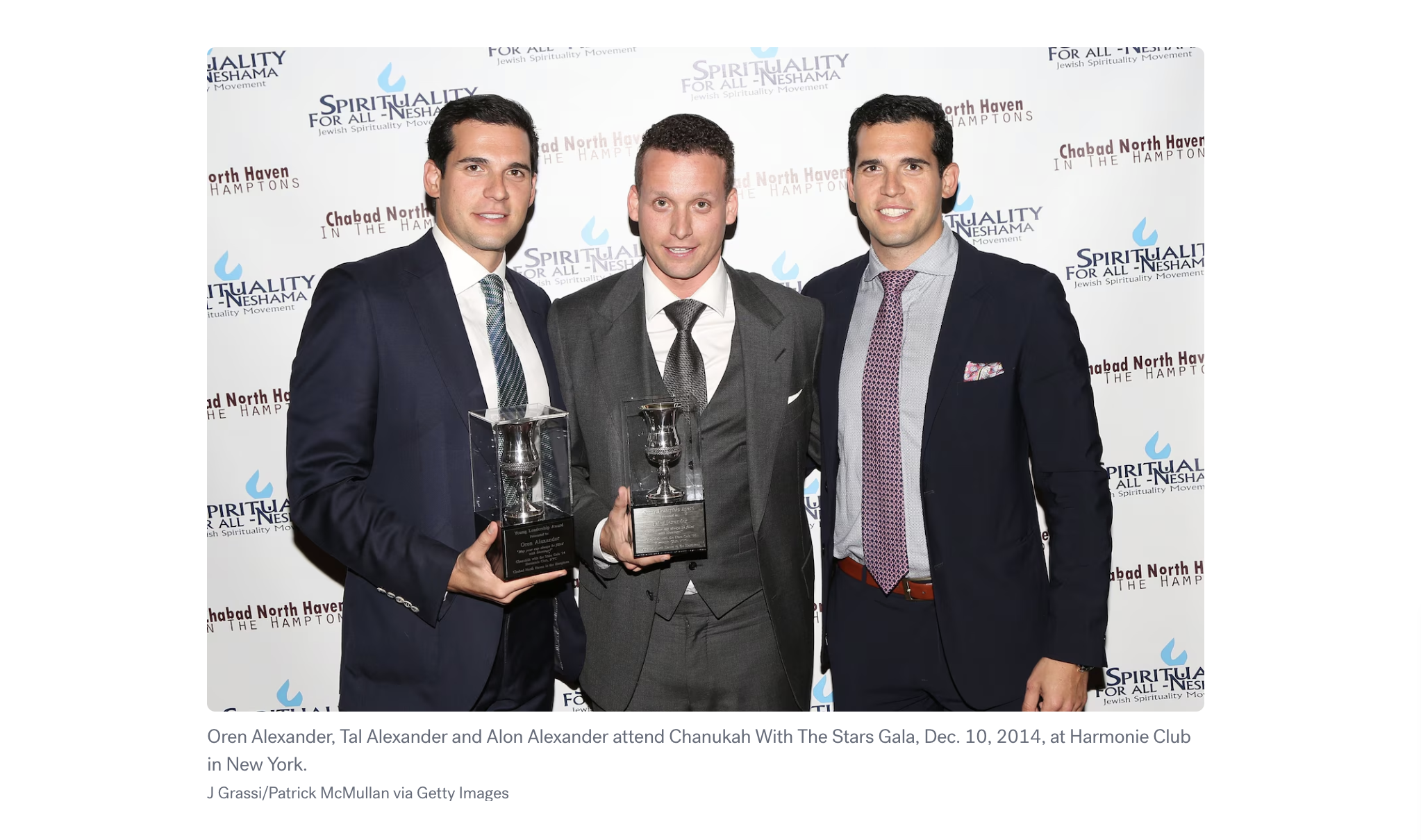
We are talking about years of representing multi-million-dollar properties, moving in celebrity & billionaire circles, and building entire identities around extreme wealth, status, influence, and access to power.
And yet, the women who bravely testified during this trial described a reality that stood in violent contrast to their fake, polished image. Multiple women testified under oath that they were invited into social settings only to be drugged, lose their ability to move or speak, and then be sexually assaulted. Many didn’t know each other prior to the trial, yet the circumstances these women described were consistent. A jury heard their testimonies, examined all of the evidence, and convicted the brothers on federal sex trafficking charges.
A tough reminder.
What weighs on me as I read about the verdict is not only the brutality of what these women experienced, but the fact that it took place in an industry I work inside of every single day.
I’m not naive enough to think that real estate is uniquely corrupt or uniquely dangerous. Of course it’s not. Predators exist everywhere, especially in any setting where power and money are concentrated. Any industry where enormous wealth and status circulate will inevitably create opportunities for the sick people who are willing to exploit that very power.
What makes this case even more disturbing is when you face the fact that these men were not operating in secret. They did these things in plain sight. They built successful lives. They closed deals with other agents, developers, clients. They attended events and social gatherings. They were successful enough that many people likely assumed their success automatically meant that they possessed any degree of personal integrity. That assumption, whether we admit it or not, has protected powerful men for generations. Women are constantly navigating environments where a man’s money, reputation, or influence automatically buys him trust from the people around him.
That’s not new. That is one of the oldest protections power has ever had.
The underlying pattern is something women encounter constantly: a man with status enters a social environment where his wealth or influence automatically signals trustworthiness. Women entering that same environment are expected to accept that signal at face value. When that ‘assumption’ proves false, the consequences are devastating. Women recognize this dynamic immediately, because we spend our entire lives navigating the subtle calculations that come with it.
As a realtor, I routinely meet people I’ve never met before in empty homes and private properties. Before that even happens:
Alec knows what is on my agenda for the day.
My location is shared with multiple contacts 24/7.
If I’m meeting someone for the first time, I’ve already looked into who they are using every tool available to me.
When I enter a home, I’m well aware of where I plan to actually stand in the room, and where all of my exits are.
These are literally just a few of the habits I carry, without even thinking. None of this is dramatic, and none of it is unusual for women. These are ordinary safety practices that every single woman develops early and continues to refine over time. And what I assume is so difficult for many men to fully understand and grasp is just how routine these calculations are for us. Safety is experienced very, very differently depending on who you are in the room. When you have personally experienced sexual violence, none of these instincts go away. They sharpen.
Violence changes how a person interprets risk. It changes how they read people. How quickly their instincts activate when something feels ‘off.’
The data that the world prefers to ignore.
To be honest, I get it. One of the most uncomfortable, unthinkable truths that our society continues to avoid is how widespread sexual violence actually is. Sadly, the data isn’t ambiguous in the slightest.
Sexual assault remains one of the most underreported crimes in the United States.
It’s bad. Less than 50% of all sexual violence crimes are even reported to law enforcement (includes all victims and all forms of sexual violence).
When researchers isolate this data to sexual assault cases involving women specifically, the numbers become even more disturbing: 74% of those assaults against women are NEVER, ever reported at all.
Mine wasn’t.
Look at the data further:
1 in 6 women and 1 in 33 men will experience sexual assault in their lifetime.
75% of assaults involve drugs and/or alcohol.
80% of assaults involve someone the victim knows.
Offenders commit an average of SEVENTEEN assaults before being caught. 17.
Sexual violence is not, and never will be, “a misunderstanding.” It’s not a crime of passion; it’s not vague or something to be belittling about. Sexual violence is overwhelmingly a crime of: power, domination, and abuse.
And once you actually sit with these numbers, it becomes much easier to understand why so many survivors remain silent.
Coming forward means fear. Fear of retaliation. Of being dismissed. Blamed. Of being told it wasn’t “serious enough.” Fear of being forced to relive the worst experience of your life in front of complete strangers. I, for one, was talked out of it myself. And I can’t even imagine how impossible it must feel when the person responsible is someone with an enormous amount of money, influence, or credibility in the eyes of the world.
But this is exactly why it matters so much that when survivors do choose to speak up, that our default setting is to believe them.
Only 4% to 6% of REPORTED cases involve false accusations.
And still, a staggering 90% of REPORTED assaults NEVER result in prosecution.
So, let’s just collectively admit what we’re looking at: we are dealing with a system where the vast majority of sexual violence is never reported in the first place, and then even when it is reported, accountability still fails to materialize.
Acknowledging this is how we begin dismantling one of the most persistent myths about sexual violence: the myth that it is “rare.” It is not rare. What is rare is accountability.
Why the verdict matters beyond this case, too.
In the Alexander case, dozens of women eventually came forward. But that doesn’t happen easily. Cases involving powerful people often unfold slowly because it takes time for survivors to realize they‘re not alone. One person speaks. Another recognizes their own experience in that story. Then another. And eventually the weight of those voices becomes too heavy to ignore. This is when the ‘protective shell’ that power creates around predatory people can finally begin to crack.
Yes, there’s also certainly an elephant in the room.
This verdict arrives during a broader moment of public anger, frustration, and disgust over the ongoing lack of accountability for the powerful people connected to sexual exploitation.
The current noise around the Epstein files (although much of what’s been released by the FBI in 2025-26 has already circulated publicly for years) has forced more and more people to confront a truth that women have understood for a very long time:
Wealth and influence do not just create opportunity. They also shield abuse.
When networks of power protect people who cause harm, accountability goes out the window.
Please keep in mind that it’s entirely normal for us to be outraged by the blatant corruption and level of protection that abusers who have harmed women and children receive… It’s entirely normal for us to be furious when institutions, systems, and public figures fail to hold these people accountable to the fullest extent of the law.
When this kind of failure happens over and over and over again, it:
erodes public trust, and
reinforces the belief that status shields wrongdoing.
That is why moments like this conviction matter.
A jury examined all of the evidence and concluded that the crimes described in that courtroom were real and serious enough to warrant conviction. This decision represents more than a ‘legal outcome.’
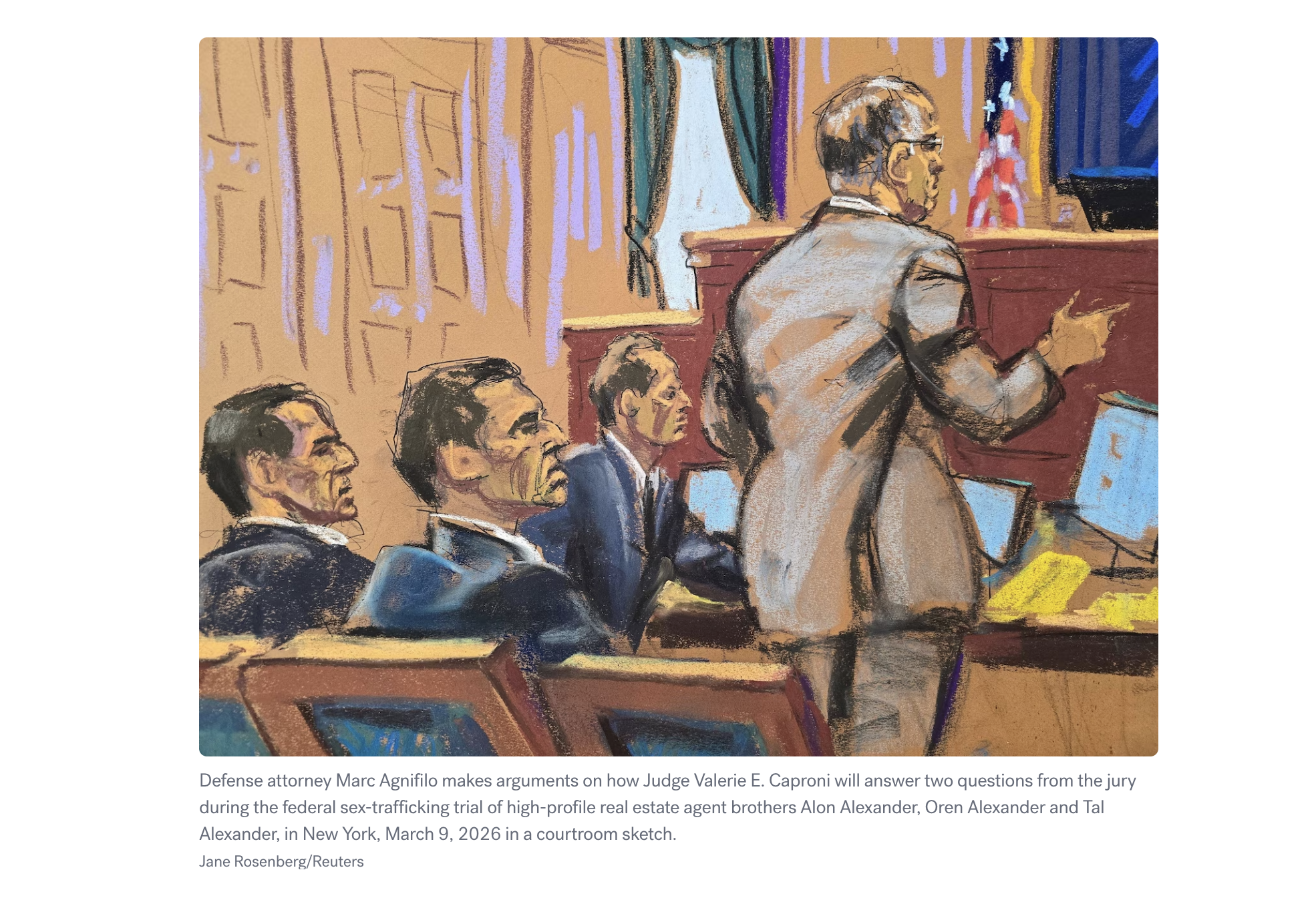
It’s a moment in which women’s testimonies were taken seriously within a system that has historically failed to protect them.
I hope with my whole heart that the women who testified feel a measure of validation in this verdict. Nothing can undo what they experienced, but accountability matters.
Progress for women is real, and so is the unfinished work.
Let’s remember this comes just days after International Women’s Day.
The case is a stark reminder that the pursuit of safety and dignity for women is far from complete.
Today, women lead companies, run businesses, close deals, build wealth, and influence industries that once actively excluded them. This is good.
But do women do all of these things, safely? No. That’s still one of many battles left for us to win.
Besides, don’t forget that many of the legal protections people point to as “evidence” of women’s progress in professional spaces are actually remarkably recent. Most happening in less decades than we can count on two hands.
In 1963, the Equal Pay Act prohibited paying women less than men for the same work. 63 years ago.
And if you are wondering whether that protection immediately applied equally to women of color, the answer is no.
Wage gaps tied to both race and gender persisted long after the law passed, and they still exist today.
Recent labor data shows Black women earning roughly 63¢ and Latina women about 58¢ for every dollar earned by white men.
In 1964, Title VII of the Civil Rights Act made employment discrimination based on sex illegal. 62 years ago.
In theory, employers could no longer discriminate based on gender.
In practice, enforcement took decades, and women of color continued to face layered discrimination tied to both race and gender that limited hiring, promotions, and pay.
In 1974, the Equal Credit Opportunity Act allowed women to apply for credit cards, mortgages, and loans without needing a male co-signer. 52 years ago.
Yes, you read that correctly. Before this law, banks could legally require a husband or father to sign off on a woman’s financial decisions.
Even after this reform, discriminatory lending practices like redlining continued to disproportionately affect Black, Native American, Latina, and Asian women seeking homeownership or business capital.
In 1988, the Women’s Business Ownership Act removed laws requiring male relatives to co-sign business loans and expanded women’s access to federal contracts. 38 years ago.
And even today, women, especially women of color, receive a disproportionately small share of venture capital and business lending despite being one of the fastest-growing groups of entrepreneurs in the country.
Protections for LGBTQ+ women are even more recent. It wasn’t until the 2020 Supreme Court decision in Bostock v. Clayton County that discrimination based on sexual orientation or gender identity was recognized as illegal under federal employment law. 6 years ago.
Native American women faced another enormous legal gap for decades: tribal authorities often lacked jurisdiction to prosecute certain crimes committed against Native women by non-Native offenders. The 2013 reauthorization of the Violence Against Women Act restored limited tribal authority to prosecute those crimes. 13 years ago.
I include all of this information here because when people talk about “women having equal opportunity today,” it’s important to remember how recent many of these protections actually are, and how unevenly they have been (and still are being) experienced.
This progress did not happen centuries ago. Most of it happened within the last 10 to 70 years.
What I refuse to let people “gloss over.”
Ignoring this reality only allows it to persist.
Systems will change when you and I are willing to examine the uncomfortable truths, and state clearly that certain behavior will no longer be tolerated.
When survivors speak about sexual violence and abuse of power, their voices deserve to be taken seriously. Listening to them is not simply a gesture of support. It’s a necessary step toward building better companies, better systems, and better communities where safety and accountability actually mean something.
Frankly, women shouldn’t have to keep bleeding in public for the world to finally decide we were telling the truth all along.
Let me know your thoughts below!
